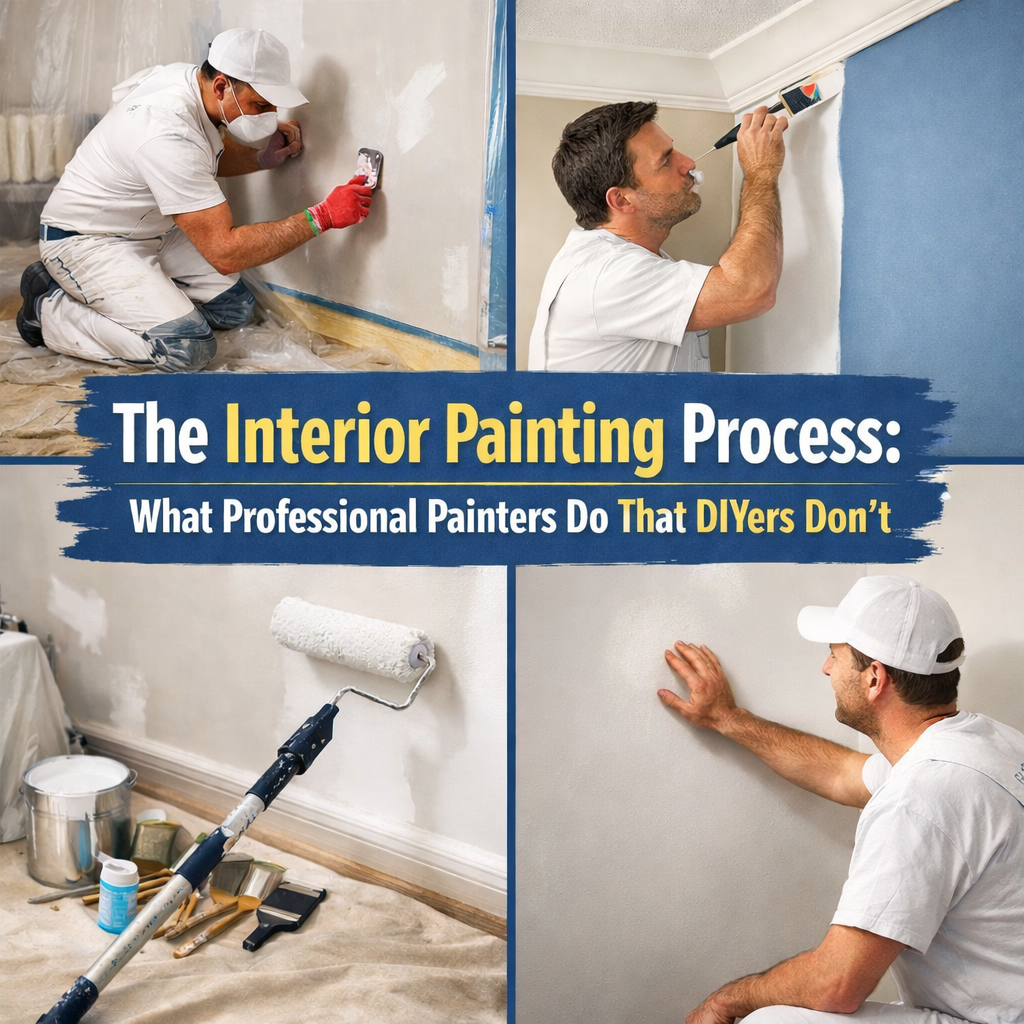
Why the Interior Painting Process Matters
Professional interior painting may seem simple at first glance. Many homeowners believe it is just a matter of opening a can of paint and rolling it onto the wall. In reality, achieving a smooth, durable, professional finish requires a detailed process that goes far beyond applying paint.
Professional painters understand that preparation, proper materials, and correct application techniques are what separate a long-lasting finish from a paint job that fails within a year. Every step, from surface preparation to final inspection, plays a role in how the finished project looks and how well it holds up over time.
Surface Preparation Comes First
One of the biggest differences between professional interior painting and most DIY jobs is the level of preparation. Walls often have imperfections such as nail holes, dents, drywall seams, and minor cracks. These flaws become even more noticeable after fresh paint is applied if they are not properly repaired.
Professional painters begin by inspecting all surfaces carefully. Professional painters fill nail holes and dents with patching compound, repair drywall seams when necessary, and sand rough areas smooth. Proper preparation ensures that the finished walls look clean and uniform rather than highlighting imperfections.
In many homes, this stage alone can take a significant amount of time, but it is essential for a high-quality result.
Cleaning and Protecting the Space
Before painting begins, professional interior painters also take steps to protect the surrounding area. Furniture is moved or covered, floors are protected with drop cloths, and trim, fixtures, and hardware are carefully masked.
Professional painters also clean walls to remove dust, grease, or residue that could prevent paint from bonding properly. Kitchens, bathrooms, and high-traffic areas often require extra cleaning before painting begins.
These precautions help prevent damage to the home and ensure the interior paint adheres correctly.
Proper Priming When Needed
Primer is another step that is often skipped in DIY projects but can make a significant difference in the final result.
Primer helps paint adhere better to the surface and provides a consistent base color. It is especially important when:
- Painting over repaired drywall
- Covering dark or bold colors
- Painting new drywall or bare surfaces
- Dealing with stains or previous water marks
Using the correct primer ensures the finish coat looks even and prevents issues such as flashing or uneven color.
Professional Interior Painting Application Techniques
Applying interior paint correctly requires more than simply rolling it on the wall. Professional painters use specific techniques to create smooth, consistent coverage.
Edges and corners are carefully cut in with a brush before rolling the larger wall areas. High-quality rollers and brushes are used to reduce streaks and ensure an even texture across the surface.
Professionals also understand how to maintain a “wet edge,” which prevents visible lap marks and creates a uniform appearance across the wall.
Why Two Coats Make a Difference
A common shortcut in DIY painting is applying only one coat of paint. While it may initially appear acceptable, a single coat often results in uneven coverage, reduced durability, and inconsistent color.
Professional interior painting typically includes two full coats of paint. This provides:
- Better color depth
- More consistent coverage
- Greater durability
- Longer-lasting results
Applying two coats also helps ensure the finish looks smooth and professional from every angle.
Final Inspection and Touch-Ups
Once the painting is complete, professionals perform a detailed inspection of the entire space. Small imperfections, missed areas, or minor touch-ups are corrected before the project is considered finished.
This final step ensures the results meet professional standards and the homeowner receives a clean, polished finish.
The Value of Professional Interior Painting
Interior painting can dramatically improve the appearance of a home, but the quality of the result depends heavily on the process used. Proper preparation, the right materials, and skilled application techniques are what create a finish that looks great and lasts for years.
While DIY painting may seem straightforward, professional painters bring the experience, tools, and attention to detail necessary to deliver consistent, high-quality results.
Like this:
Like Loading...