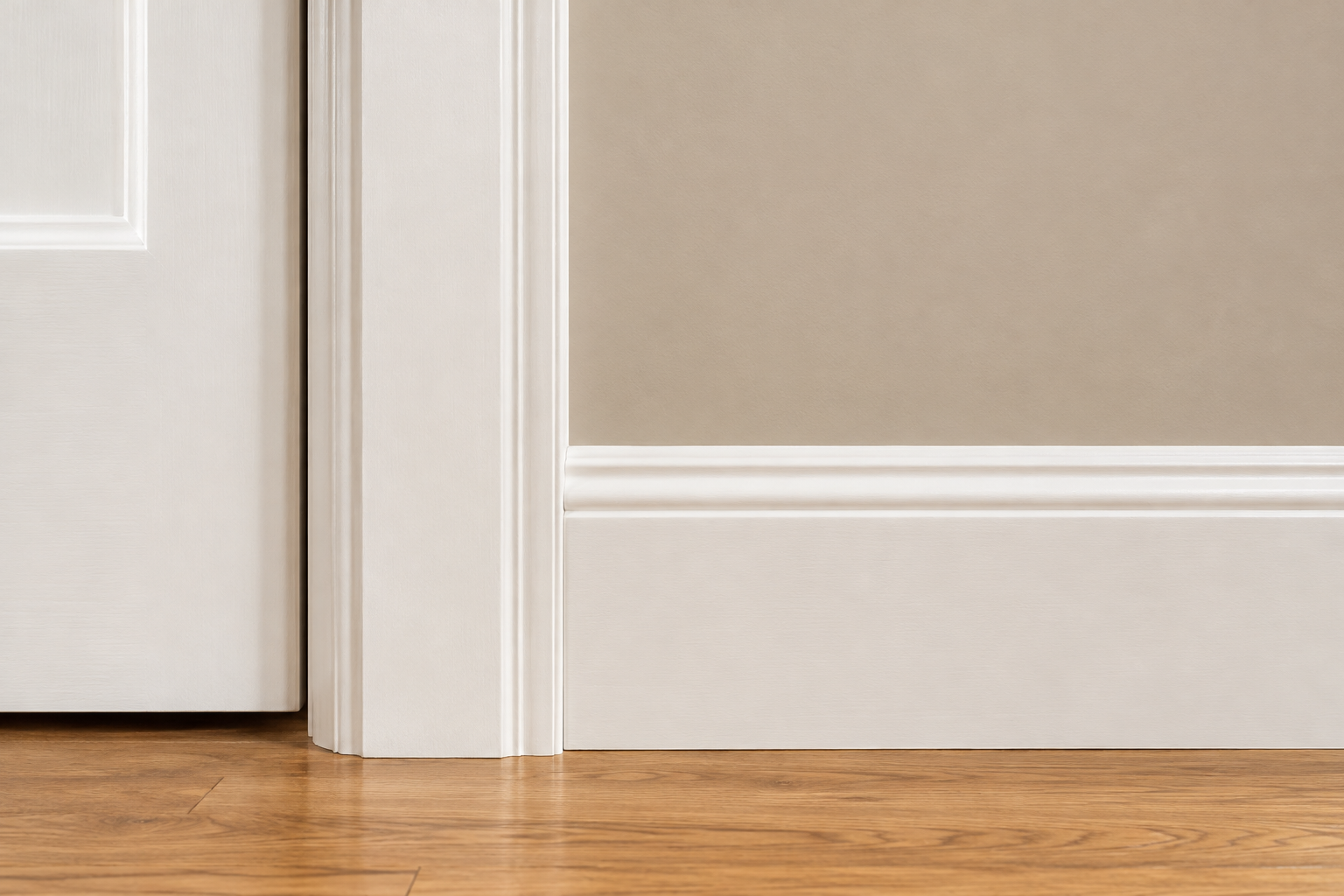
Should you paint stained wood trim or keep its natural finish? The right answer depends on the woodwork, the surrounding finishes, and the character you want your home to have.
Paint can bring consistency to mismatched trim and change how a room feels. However, attractive stained wood can add warmth, depth, and detail that deserves to stay.
Before choosing a color or requesting an estimate, take a closer look at what you already have. This guide explains when painting makes sense, when preserving the wood is worth considering, and how to plan an update that feels intentional.
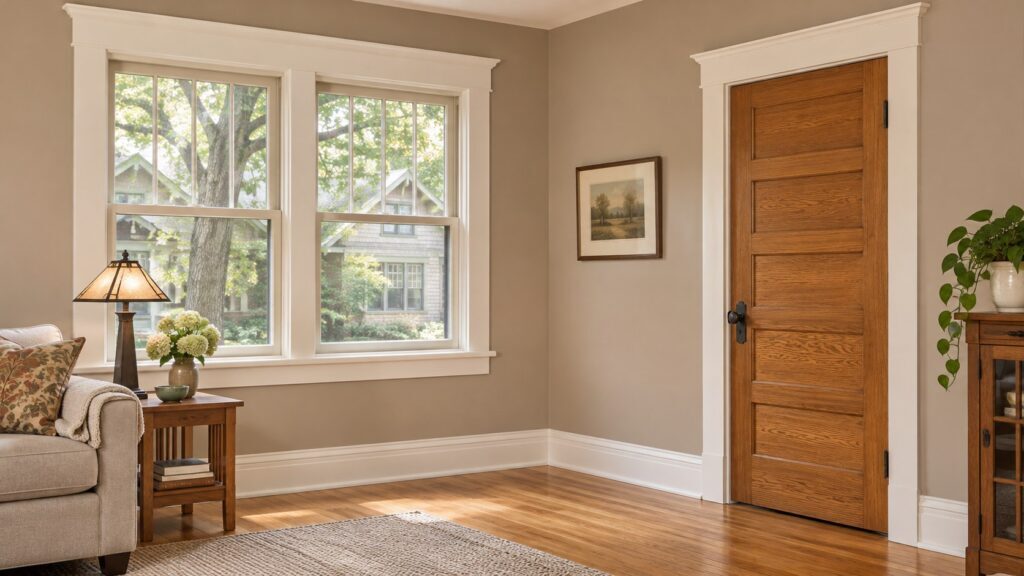
1. Start with the woodwork, not the paint color
It is easy to look at a room you dislike and assume the stained trim is the problem. Sometimes it is. Other times, the wall color, lighting, or surrounding materials make the wood look out of place.
Before deciding, examine the trim on its own.
Look at the grain, profile, condition, and consistency. Wide casings with distinctive details deserve a different conversation than simple trim assembled from several mismatched replacements.
Ask yourself:
- Do I like the wood itself?
- Does the trim match the doors, windows, and built-ins?
- Is the finish in good condition?
- Would I still dislike it beside a different wall color?
- Is the woodwork a feature I want people to notice?
Your answers will help separate a design problem from a finish problem.
For example, a warm stained casing may look overly orange beside a cool gray wall. A warmer wall color could soften that contrast without changing the wood.
2. When should you keep stained wood trim?
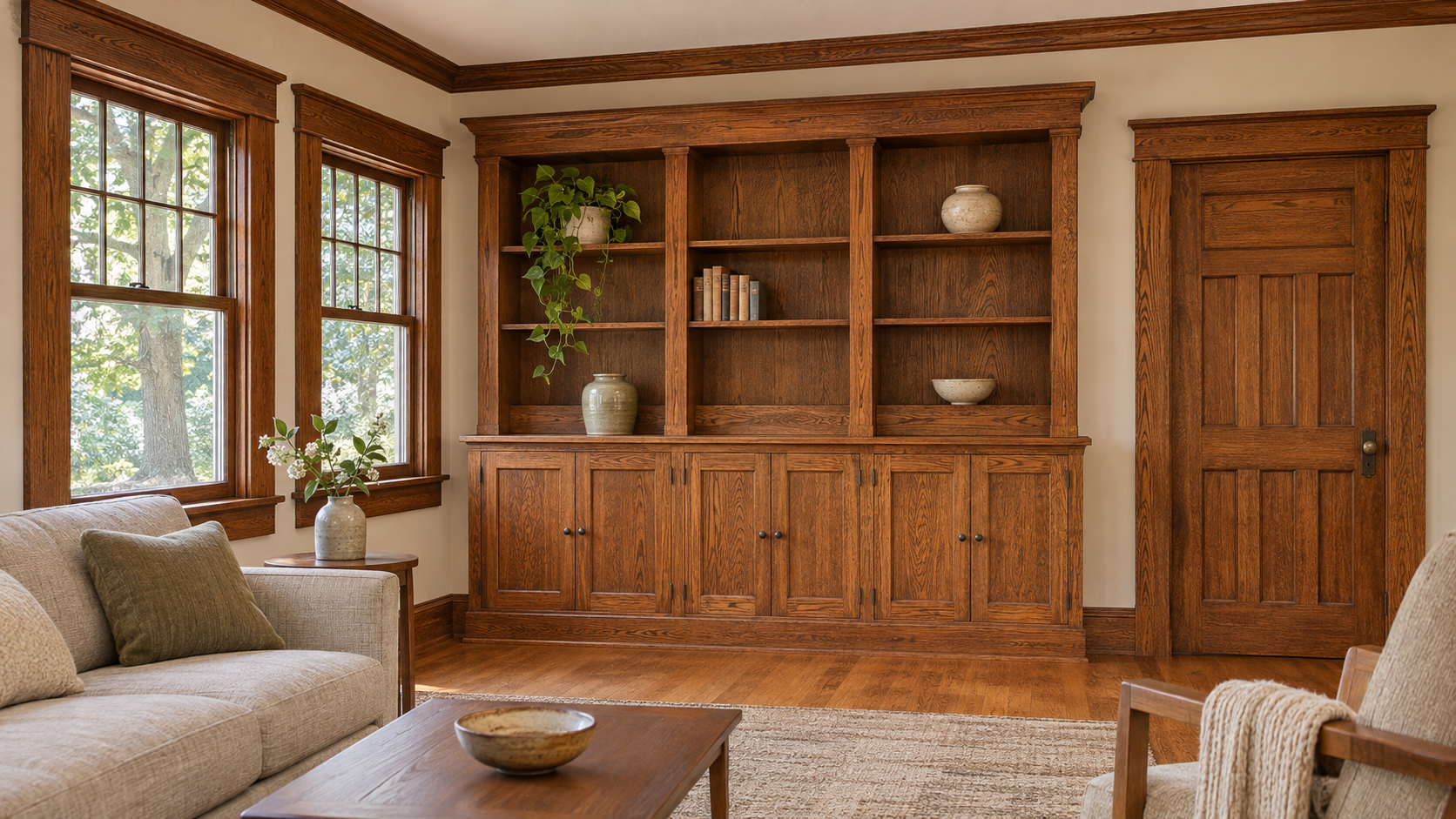
Keeping stained trim makes sense when the wood contributes something you value: attractive grain, coordinated finishes, or craftsmanship that helps define the home.
The woodwork is an architectural feature
Substantial casings, paneled doors, stair details, and built-ins can give a room much of its character.
If those elements form a coordinated set, consider how painting one part will affect the whole. White baseboards beside stained door casings might work in one room and feel disconnected in another.
Look at the full composition before choosing individual pieces to paint.
The finish needs attention, but you still like the wood
A worn finish does not automatically mean the trim should be painted.
Depending on its condition and previous coatings, cleaning, repairs, or professional refinishing may be worth exploring. These options should be assessed before assuming paint is the only practical update.
You are unsure about making a lasting change
Returning painted trim to a stained finish can involve substantial stripping and refinishing. The result depends on the wood, the paint system, and the details of the trim.
If you remain uncertain, begin with wall samples, lighting changes, or furnishings. Those updates can help you judge the wood in a different setting.
3. When does painting stained wood trim make sense?
Painting is worth considering when the existing finish makes the space feel inconsistent or no longer supports your design goals.
Several wood finishes compete
A room may have original baseboards, newer window casings, replacement doors, and flooring installed at a different time.
Each finish may look fine separately. Together, they can create competing colors and grain patterns.
Painting selected trim can introduce a consistent frame around the room while allowing the flooring or another wood feature to stand out.
Repairs interrupt the stained appearance
Filled holes, patched sections, and replacement pieces can be difficult to blend into a transparent finish.
A painted coating can provide a more uniform appearance once those repairs are properly prepared. It will not, however, automatically conceal uneven surfaces or open wood grain.
You want to change the room’s visual structure
Contrasting trim outlines windows and doorways. Trim close to the wall color creates a softer transition. A deeper color can emphasize the shape of substantial casings.
That choice affects how the room feels even when the furniture and flooring stay the same.
The most successful update starts with the effect you want, then selects the color and finish to support it.
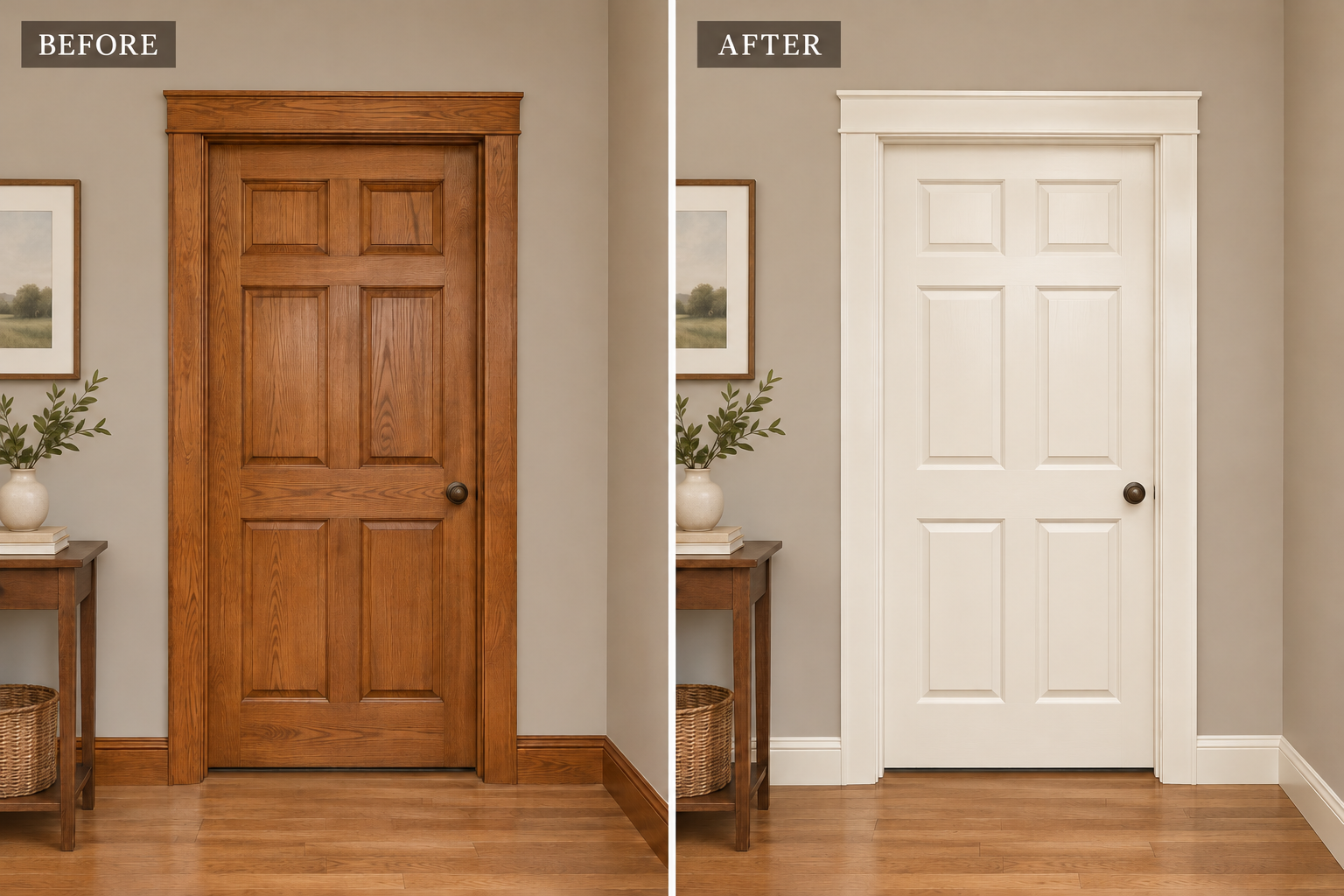
4. Can you combine painted trim with stained wood?
Yes. Painted and stained finishes can work together when their relationship is planned.
You might preserve a stained staircase while painting nearby baseboards. You could also keep attractive wood doors and paint the surrounding casings.
The important detail is where each finish begins and ends.
Before approving the project, review:
- Door slabs, edges, and jambs.
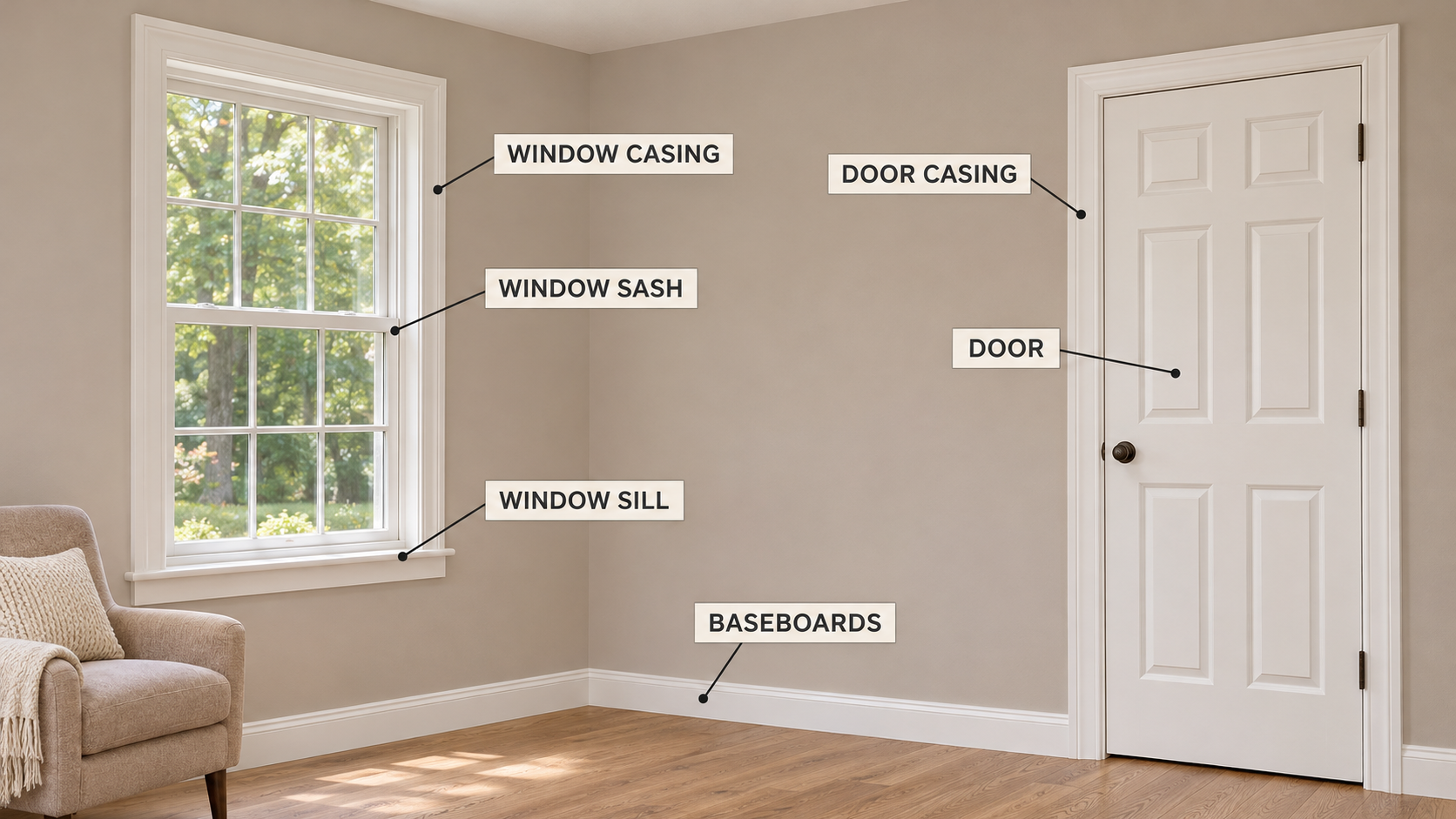
- Window casings and sashes.
- Baseboards where rooms connect.
- Stair skirts, railings, and posts.
- Built-ins that meet surrounding trim.
- Views through open doorways.
Think about the home from several positions. A finish combination that looks balanced inside one room should also make sense from the hallway.
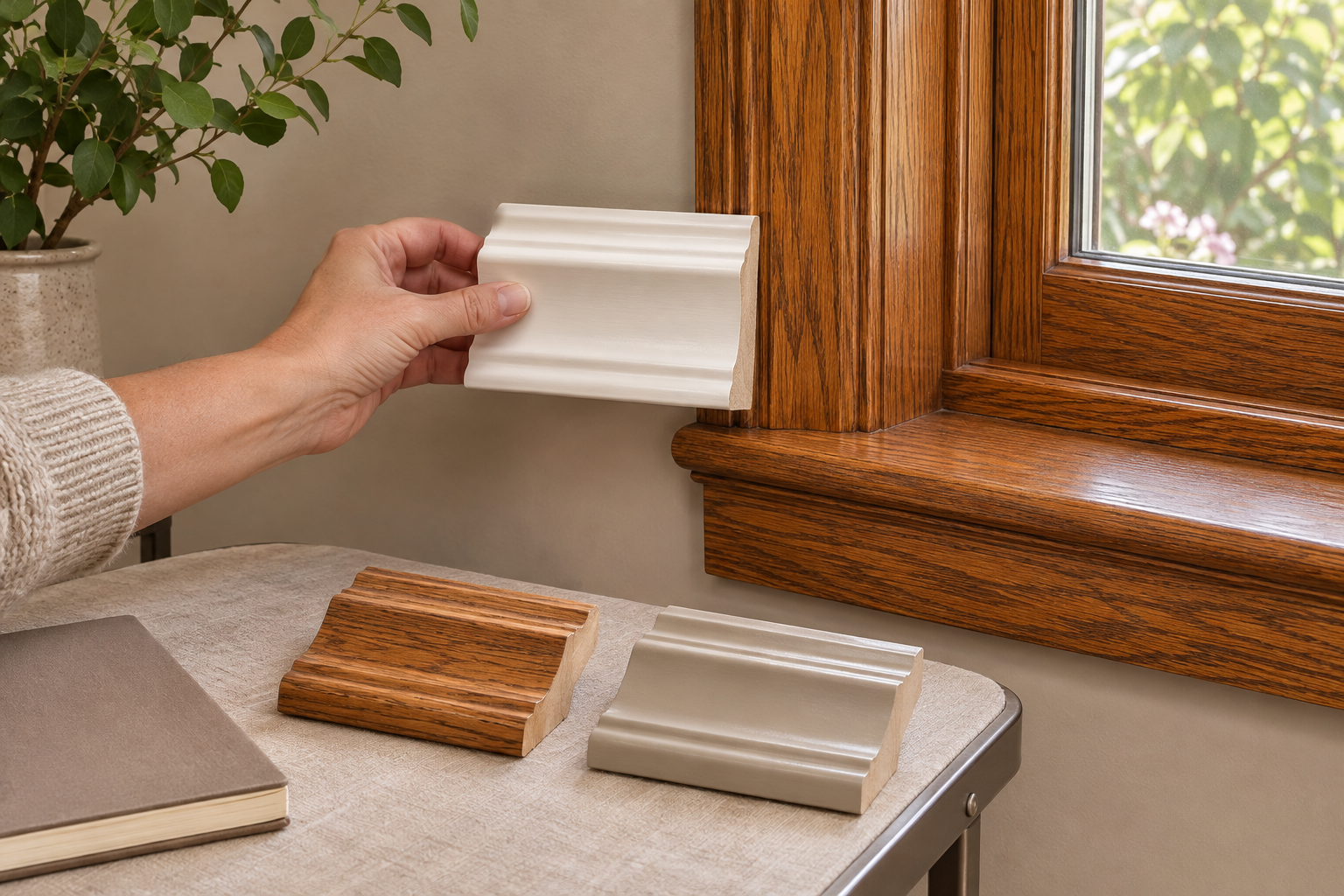
For an uncertain project, start with a sample board or visual mockup. Avoid using a prominent section of original woodwork as an experimental paint sample unless you have committed to covering it.
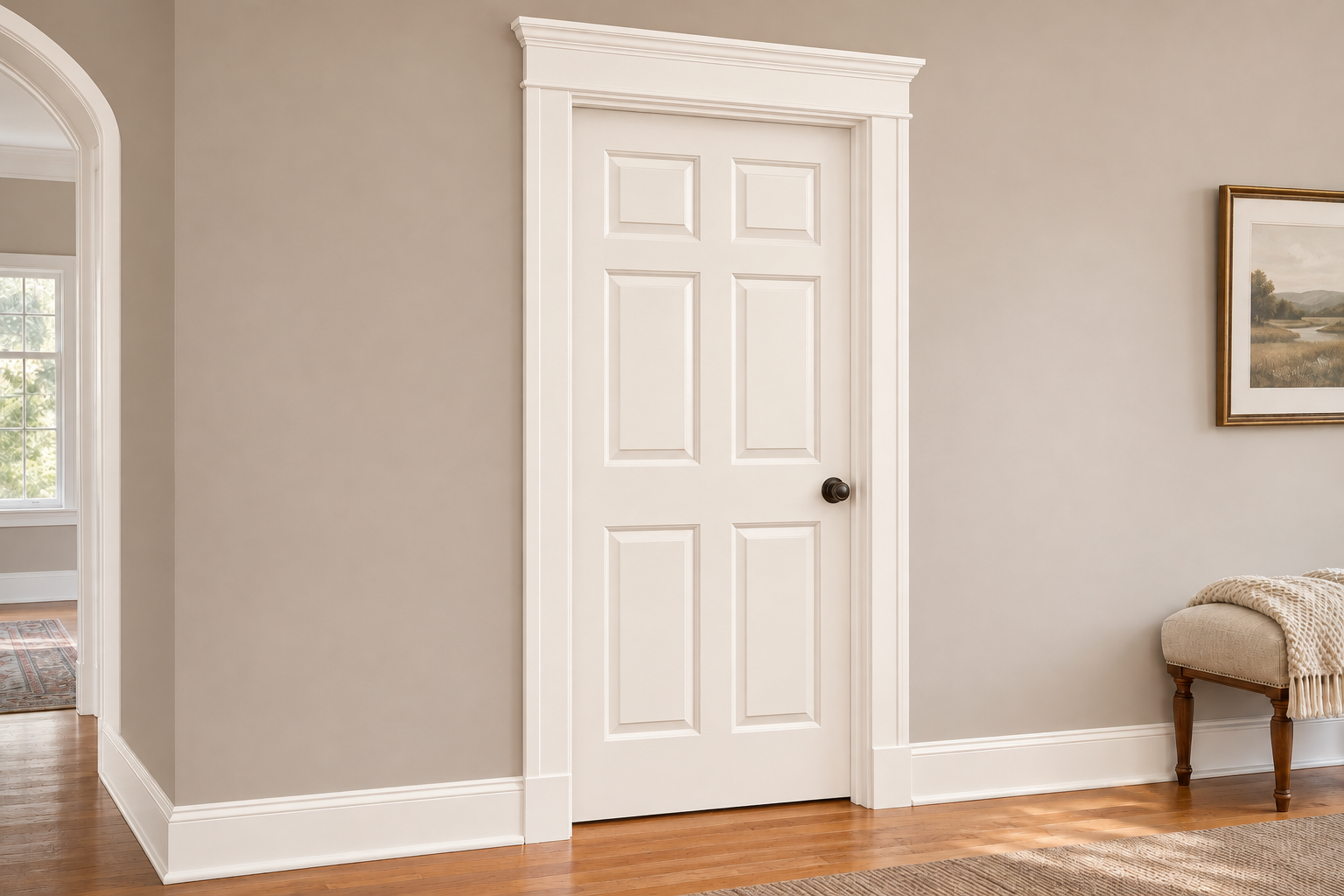
5. What color should you paint stained wood trim?
Start with the materials that will remain.
Flooring, cabinets, tile, countertops, and nearby stained wood all influence how a trim color looks. Choose samples beside those surfaces rather than selecting a white or neutral in isolation.
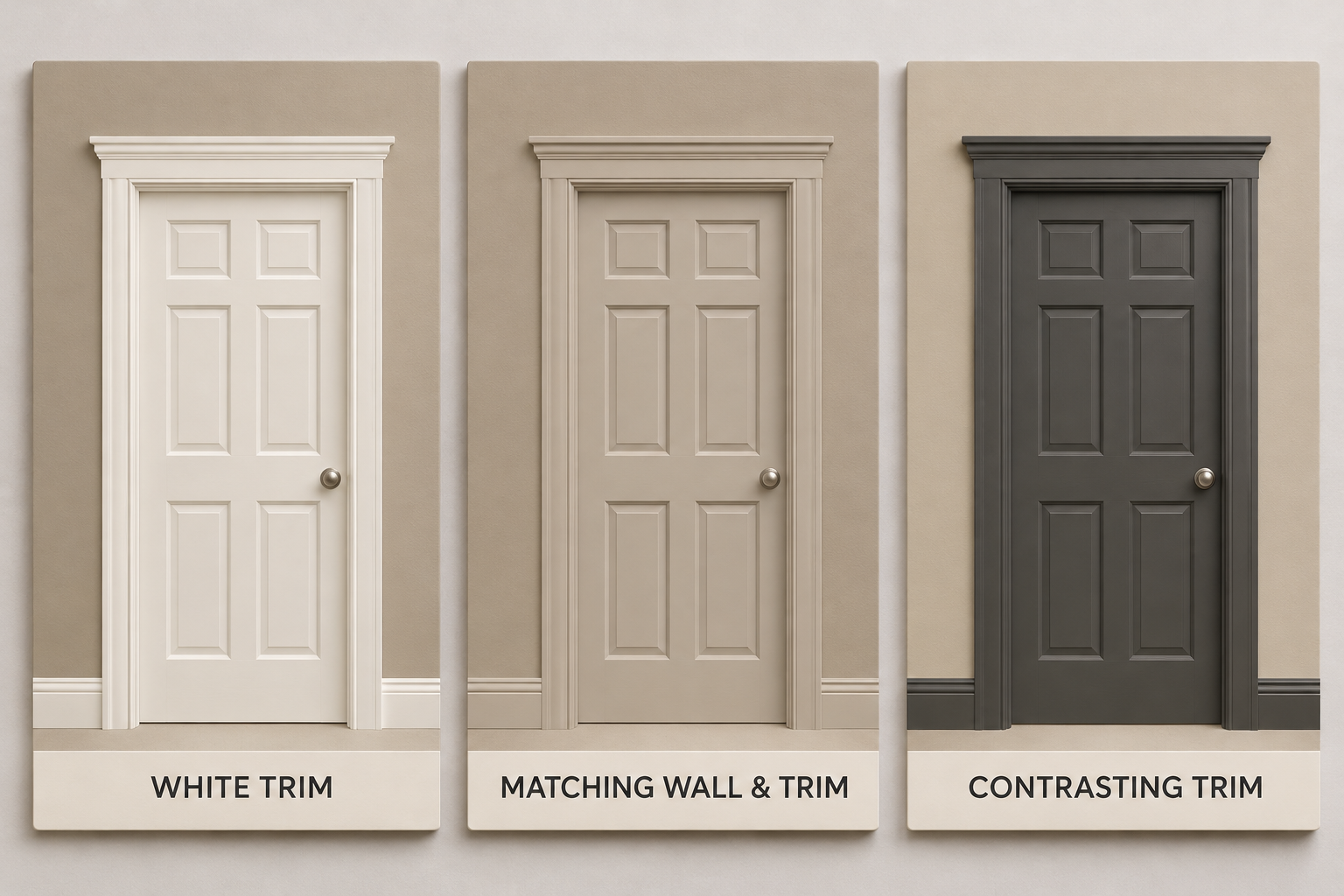
White and off-white trim
White can create clear definition around windows, doors, and baseboards.
However, whites have different undertones. A cool white may feel disconnected beside warm flooring. A creamy white may look too yellow beside cooler finishes.
Compare a small group of samples in the actual room, during daylight and under evening lighting.
Trim that matches the walls
Using the same color on walls and trim can reduce visual breaks and create a more continuous appearance.
The coatings and sheens may still differ to suit each surface. Because sheen changes how light reflects, test the intended combination before committing.
Contrasting trim
A muted contrasting color can highlight attractive profiles and give doors or windows more presence.
Look beyond the single room. Consider whether that color works with adjacent spaces, especially where the trim continues through an open layout.
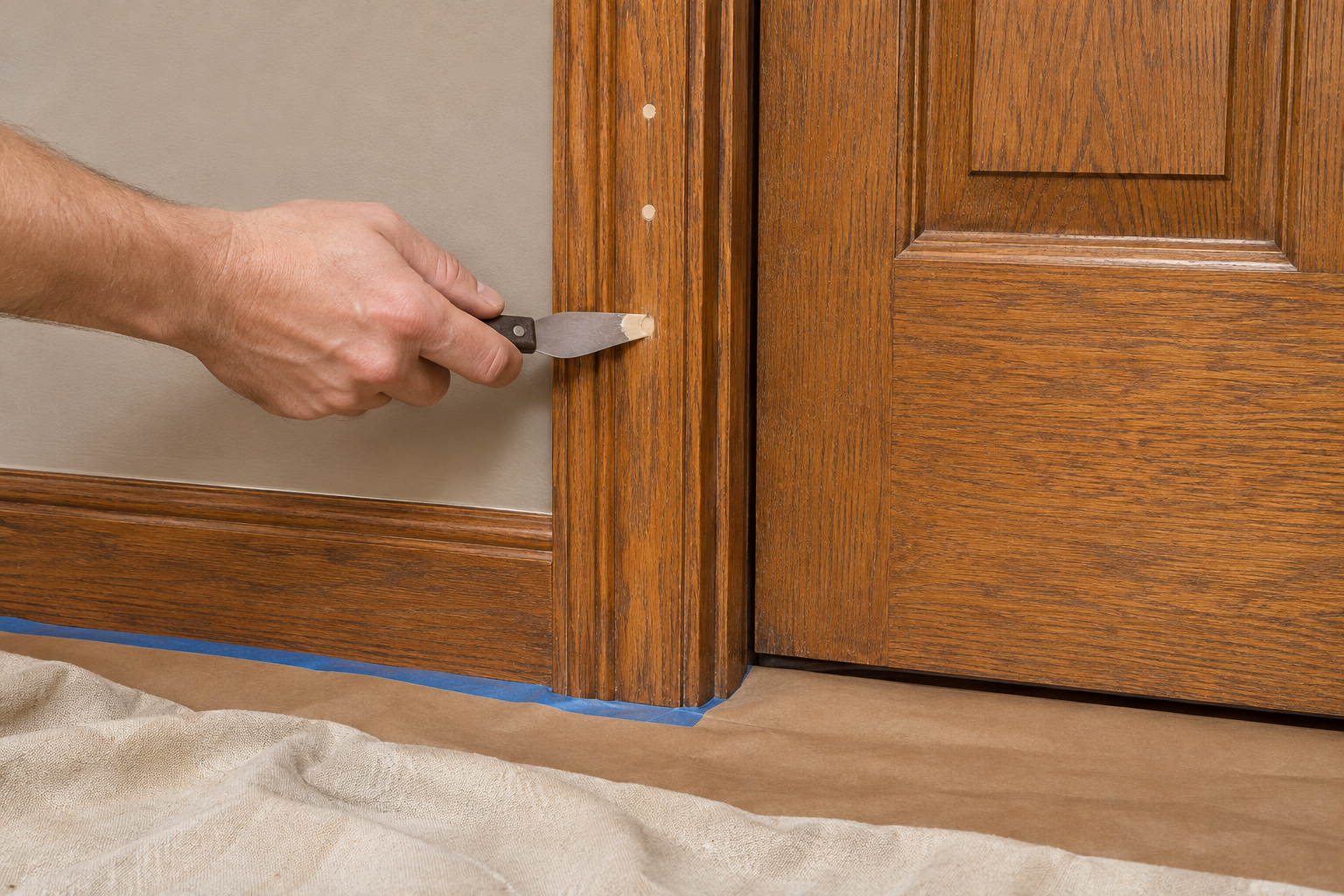
6. What preparation does stained trim need before painting?
Good preparation starts with identifying the existing surface and selecting a compatible coating system.
Stained trim often has a clear protective finish. Household polish, cleaning residue, hand oils, and worn coatings can also affect adhesion.
A professional assessment should address:
- Whether the existing finish is sound.
- Cleaning and contamination removal.
- Repairs and surface preparation.
- Adhesion and stain-blocking needs.
- A finish coating intended for doors and trim.
- Drying, recoating, and curing requirements.
There is no single primer or preparation shortcut suited to every project. Product selection should follow the actual conditions and the manufacturer’s instructions.
If you want a closer look at how the work is performed, read our guide to stained-trim conversion: changing stained trim to painted trim.
For homes built before 1978, older painted layers may contain lead. Discuss appropriate assessment and lead-safe practices before work disturbs those layers. The EPA’s guidance for homeowners planning renovation and painting explains the concern and how to find qualified help.
7. What affects the cost of painting wood trim?
The amount of trim matters, but its condition and complexity can matter just as much.
A smaller room with several windows, detailed casings, and multiple doors may involve more work than a larger room with simple baseboards.
Important cost factors include:
| Factor |
Why it affects the work |
| Quantity of trim |
More surfaces require more preparation and application time. |
| Detailed profiles |
Grooves and decorative shapes require careful access and finishing. |
| Existing condition |
Damage, contamination, or failing coatings add preparation work. |
| Doors and windows |
Jambs, edges, sashes, and multiple components expand the scope. |
| Desired appearance |
Reducing visible grain can require additional work beyond painting. |
| Access and protection |
Furnished rooms and nearby finishes affect setup and application. |
| Coating system |
Primer, finish products, and required application stages vary. |
Ask for a written scope that identifies exactly what is included.
“Paint the trim” may mean baseboards and casings to one person, while another expects doors, jambs, and window components too. Clear definitions make estimates easier to compare.
8. Questions to ask before approving your trim project
A useful proposal should connect the finished appearance you want with the work needed to achieve it.
Before approving the project, ask:
- Which surfaces are included?
- How will the existing finish be evaluated and prepared?
- Which primer and finish are recommended, and why?
- Will the wood grain remain visible?
- How will floors, walls, and furnishings be protected?
- What application method will be used?
- When can doors close normally and surfaces be cleaned?
- How will the finished work be reviewed?
Bring photographs of finishes you like, but discuss what those photographs show. A smooth sample on one type of wood may look different from painted open-grained trim in your home.
Clear expectations help prevent disappointment over texture, sheen, coverage, and the boundaries of the project.
9. Frequently asked questions about painting stained trim
Can stained trim be painted without stripping it to bare wood?
Often, yes, when the existing finish is sound and can be prepared for a compatible coating system. Failing finishes or contamination may require a different approach.
Can you paint stained trim without sanding?
Preparation depends on the surface and products involved. Avoid choosing a process solely because it promises to eliminate sanding. Cleaning, adhesion requirements, and the manufacturer’s preparation instructions still need to be addressed.
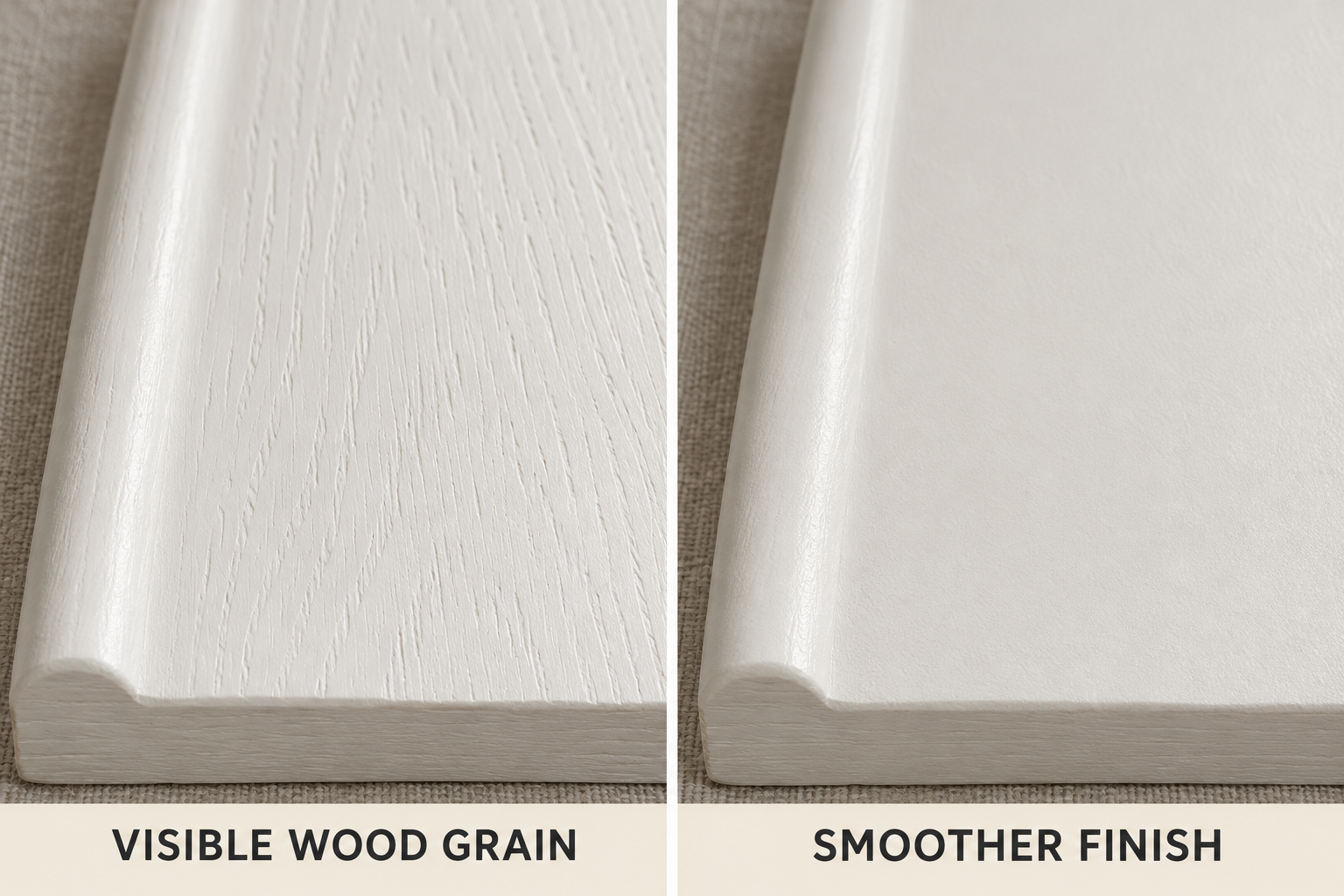
Will paint hide oak grain?
Paint changes the color, but it does not automatically eliminate grain texture. If you want a smoother appearance, ask whether grain filling and additional preparation are included.
Should all the trim in the house match?
No. Different finishes can work when their transitions are intentional. Start by reviewing connected rooms and the views between them.
Will painting trim increase my home’s value?
There is no guaranteed increase. Consider the wood’s condition, the home’s character, and the cost of the project. Painting damaged or inconsistent trim is a different decision from covering attractive original woodwork.
10. Should you paint stained wood trim in your home?
Keep the wood when its grain, craftsmanship, and relationship to the room are features you enjoy. Consider painting when you want to unify mismatched finishes, update repaired trim, or create a different balance between walls and woodwork.
You can also combine the two approaches.
The best next step is to evaluate the actual surfaces and look at samples beside the materials that will remain.
Expert Painting LLC provides trim painting services in Milwaukee for baseboards, window casings, doors, and other interior woodwork.
If you are deciding whether to paint stained wood trim, request an on-site consultation. We can review the condition of your trim, discuss your goals, and explain the preparation and finish work involved.